Vallox X-Line PTX

Vallox X-Line PTX

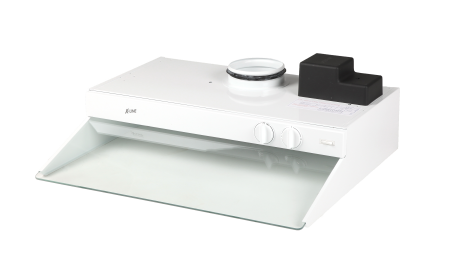
Vallox X-Line PTX is a hood range manufactured in Finland, designed for adjusting dwelling-specific ventilation in terraced and detached houses. With the X-Line PTX cooker hood, you can control dwelling-specific ventilation units, roof fans or air heating units equipped with AC fans.
Featuring a fixed glass, efficient light and dishwasher-proof grease filter, the hood range is designed not only for removing cooking smells but also for adjusting the fan speed of the ventilation unit. When serving as the controller of the ventilation unit, the damper of the control hood is normally closed and the ventilation efficiency is in normal mode. When you want to boost ventilation during cooking, for example, the damper is opened. This increases the extract air flow in the kitchen When the damper is closed, ventilation is boosted in other parts of the home.

If the control hood is connected to control the roof fan, the damper prevents cold air from flowing down when the roof fan is switched off.

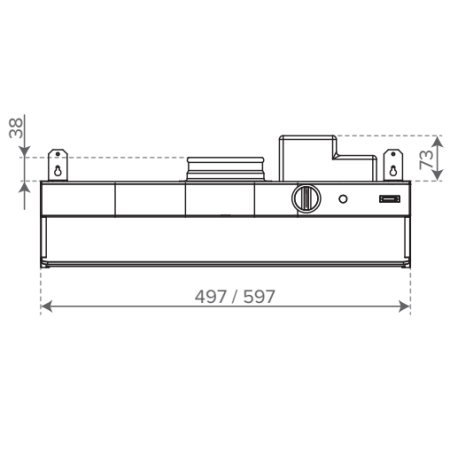
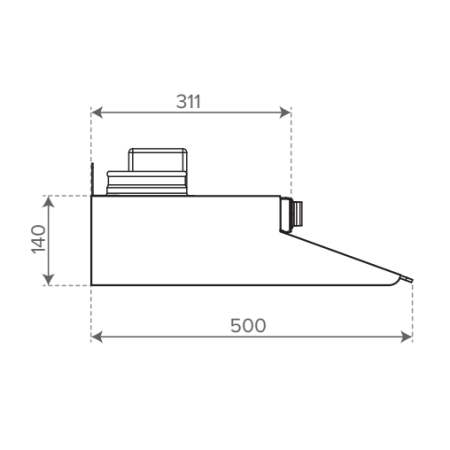
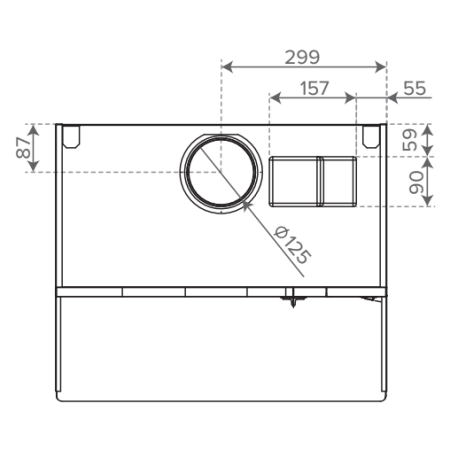
Vallox X-Line PTX is available in white colour and in standard widths of 500 and 600 mm. The control hood is mounted on the wall.

Category:
Suitable for the following applications
Apartment houses icon
Apartment houses
Small houses icon
Small houses

Which cooker hood is suitable for replacing an old MUH cooker hood?

You can find the cooker hood compatibility table here.

Which cooker hood is suitable for mechanical ventilation?

In smaller apartments, the cooker hood’s extraction function can be connected to the ventilation unit, eliminating the need for a separate extractor hood or dedicated ducting for cooking fumes. The cooker hood can also be connected to a stove fan and house fan unit or a roof exhaust fan, in which case cooking fumes are extracted through a separate route.

The Vallox product range includes cooker hoods for both extraction methods. Vallox also offers cooker hoods designed for centralized duct systems in apartment buildings as well as for apartment-specific ventilation systems.


What is the difference between a cooker hood and a cooker extractor fan?

A cooker hood is equipped with a grease filter, lighting, and controls that can be used to control the ventilation system through the hood. A cooker extractor fan has its own motor and fan, which actively remove air.

Some cooker hoods can be connected to an in-line duct fan, which effectively turns the hood into a cooker extractor fan. Cooker hoods compatible with a duct fan include:

  • Vallox Delico PTD EC
  • Vallox Capto PTC EC
  • Vallox X-Line PTXP MC
  • Vallox X-Line PTXPA MC

A duct fan can also be installed in combination with other cooker hoods that support the control of EC fans.

Should I choose a cooker hood or a cooker extractor fan?

The choice between the two depends on the type of ventilation system installed in the building and what can be connected to it.

A cooker hood is the right choice if the building has a roof exhaust fan or if you are allowed to install the cooker hood in the same duct system as the ventilation unit.

A cooker extractor fan is the right choice if the building has a dedicated exhaust duct for cooking fumes and you are allowed to use a device with a separate fan motor.

Which cooker hood is suitable for my kitchen?

Choosing a cooker hood depends on the size and location of the cooktop, the mounting and control method of the hood, the desired features, ease of maintenance, budget, and appearance.

The width of the cooker hood is usually selected according to the size of the cooktop. The location of the cooktop affects whether a wall-mounted, cabinet-integrated, or island-mounted cooker hood is the most suitable option.

The required extraction airflow rate depends on how much and how often cooking is done in the home. The control method is determined by the type of fan used.

Cooker hoods are also available with a variety of features, such as a smoke limiter or a temperature monitor, which are worth considering before making a selection. When evaluating maintenance requirements, it is important to consider how easily the grease filter can be cleaned and how easy it is to keep the hood clean.

Vallox X-Line cooker hoods and residential ventilation units feature a fixed glass design and are intended for installation within kitchen cabinetry.

Vallox Delico is a Finnish-made cooker hood range suitable for a variety of kitchens. Its glass front panel is available in both white and black, and the hood integrates elegantly into the kitchen design.

Can a cooker hood be integrated into a kitchen cabinet?

The Vallox Delico range of cooker hoods can be easily integrated into a unified kitchen design. The hood can be incorporated into the kitchen cabinetry using a pull-out model.

With a hood installed in the underside of a cabinet, the front panel is pulled out during cooking, maximizing the extraction performance of the hood.

How high should a cooker hood be installed?

There must be a sufficient safety distance between the cooktop and the cooker hood. In most cases, the distance between the cooker hood and the cooking surface below should be at least 500-600 mm above an electric cooktop and 650-750 mm above a gas cooktop.

The installation must primarily comply with the requirements specified in the user manual of the appliance.

What do the letters in cooker hood model names mean?

The first part of the model name indicates the application (where the unit is used).

The last letters indicate the features (what the unit does).

KTX / KTD / KTC → For apartment building central exhaust systems (no built-in fan)

PTX / PTD / PTC → Controls a ventilation unit or roof fan (control hood)

TTX / TTC / LTC → Cooker extractor fan (with its own fan)

AC → For AC (alternating current) fans

EC → For EC (electronically commutated / DC) fans

AMotorized damper with timer operation

P → Extended control functionality / “forced control”

MC / SC → Special control or equipment version.

How does cooker hood extraction work?

The extraction airflow of a cooker hood draws air into the hood ductwork when the hood is in operation. The shape and size of the hood affect how effectively cooking fumes, steam, and odors are removed.

Cooker hood extraction can be implemented with a system that is separate from the building’s main ventilation system, using an in-line duct fan or a roof exhaust fan. Alternatively, the cooker hood can be connected to the building’s exhaust ventilation system through a ventilation unit.

How can a cooker hood be used to control a ventilation unit?

Method 1: Automatic cooker hood boost using a programmable digital input

With the cooker hood boost function, the ventilation unit’s fan speed increases when the cooker hood damper is opened.

Automatic cooker hood boost can be implemented by supplying a 24 V control voltage from the cooker hood damper timer (for example, from a Vallox KTXA cooker hood) to Digital Input 1 or 2. The timer contacts in the cooker hood close when the damper is opened.

The function of the digital input must be set to Programmable Input. In the Programmable Input settings:

  • Disable the timer.
  • Set the desired supply air fan and extract air fan power levels as percentages.
  • Set the desired supply air temperature.

These values can differ from the settings used in other operating profiles. The supply/extract air balance can also be configured differently from other operating profiles if compensation is needed for the increased extract airflow caused by opening the cooker hood damper.

Method 2: Fan speed control from the cooker hood

The fan speed of a MyVallox unit (Away / Home / Boost) can be controlled by any cooker hood that provides a 0-10 VDC control signal.

Note! The fan speed cannot be increased from the cooker hood beyond the fan speed defined in the Boost profile.

The MyVallox unit can be controlled simultaneously with the supplied MyVallox Control controller. The most recent command always takes precedence.

In both cases, all MyVallox unit functions can also be controlled from the MyVallox Control controller.

How is a cooker hood installed?

The installation of a cooker hood should always be carried out with the assistance of a professional. Ensure that the cooker hood is suitable in terms of dimensions and that the installation height is correct. Prepare the mounting either directly on the wall or underneath a kitchen cabinet.

Connect the cooker hood correctly to the ventilation system and complete the electrical connections. Test the operation of the hood, the airtightness of the ductwork, the exhaust airflow, and the functionality of any additional features.

How should a cooker hood be used correctly?

Always switch on the cooker hood or cooker extractor fan when cooking. If the hood has adjustable power settings, you can select the extraction level that most effectively removes cooking fumes and steam from the room air.

If the hood has an extendable steam collection section, it should be opened fully while cooking. This allows the hood to capture cooking fumes and steam over the widest possible area.

It is also recommended to keep the cooker hood or extractor fan running for a short period after cooking has finished. This helps ensure that all contaminants are removed from the indoor air and that the indoor environment remains fresh.

The post-operation period also ensures that any water vapor in the exhaust duct is completely removed.

How do I clean the grease filter?

Cleaning the grease filter helps ensure adequate exhaust airflow and should be carried out regularly, at least 1-2 times per month.

Warm water and a grease-removing detergent (such as dishwashing liquid) are suitable for cleaning the grease filter.

The grease filter must be allowed to dry completely before it is reinstalled.

How is a cooker hood maintained?

Grease stains resulting from cooking should be cleaned immediately, and the exterior surfaces of the cooker hood should be wiped regularly. A mild detergent solution is suitable for cleaning the exterior surfaces of the cooker hood.

In addition, the cooker hood filter should be cleaned at least 1-2 times per month.

If you notice any problems with the cooker hood’s exhaust airflow or control settings, please contact your nearest service provider.

Where can I find the model number of my cooker hood?

The model number of Vallox cooker hoods is located behind the grease filter, at the rear of the hood.
Vallox X-Line PTX | 500 mm white
HVAC number: 7911114
Color: White
Product Width: 500 mm
Product weight: 6.8 kg
Package weight: 7.3 kg
GTIN: 6415879111148
Vallox X-Line PTX | 600 mm white
HVAC number: 7911116
Color: White
Product Width: 600 mm
Product weight: 7.6 kg
Package weight: 8.2 kg
GTIN: 6415879111162

Chat
Do you need help with ventilation?