MyVallox 149 CFi enthalpy
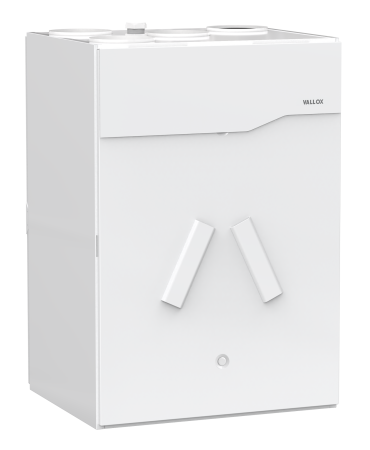
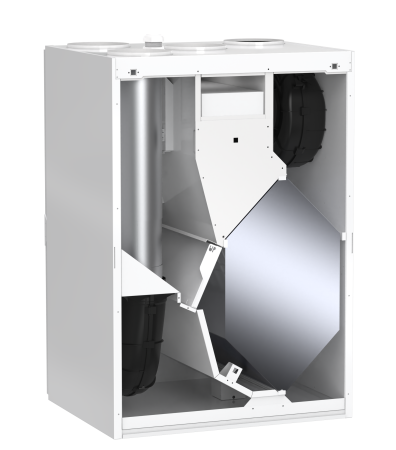
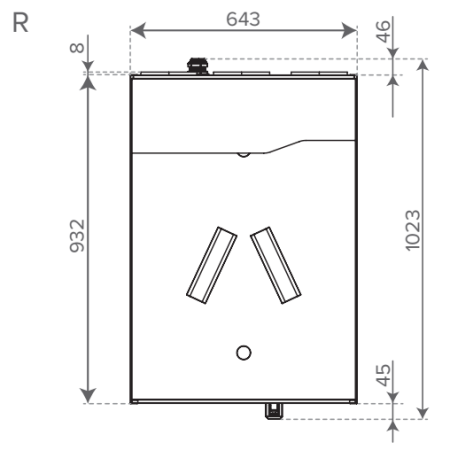

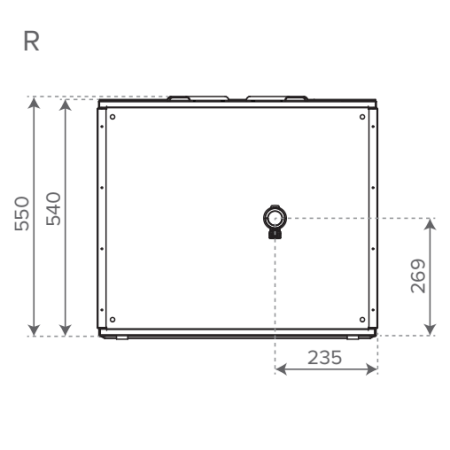


MyVallox 149 CFi enthalpy
Constant flow fans compensate for pressure differences and keep air flows in balance in windy conditions, tall buildings, during HR cell defrosting and regardless of the heat recovery bypass status. The constant flow feature can also compensate for separate exhaust fans.
The new CFi ventilation unit can be adjusted directly through the control system. The installer can set the litre-based air flows to an appropriate level quickly and easily, and the unit can also be commissioned by connecting it to a computer with an Ethernet cable.
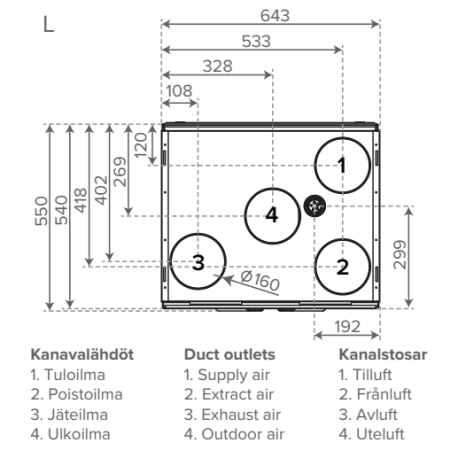
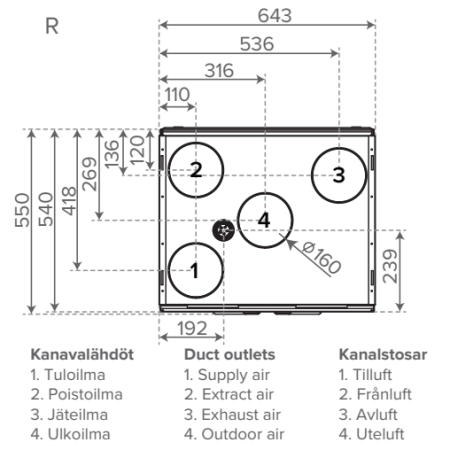
MyVallox 149 CFi has a fully renewed two-handed frame, allowing the unit to be ordered without deciding the handedness in advance. The unit has a door on both sides, and the handedness can be changed by switching the positions of the doors. The factory standard is R-handedness. Separate filter doors in the front door make filter replacement effortless.
Integrated sensors control ventilation automatically according to indoor air quality. The MyVallox 149 CFi with an enthalpy cell is designed to reduce energy consumption and energy costs. The unit’s SEC class is A+.

What is an enthalpy heat recovery cell? How does it differ from an aluminium heat recovery cell?
In terms of operation, the enthalpy heat recovery cell is nearly identical to the aluminium heat recovery cell. The cells are the same size and look similar. The difference is that the cell layers of the enthalpy heat recovery cell are made from film, not aluminium, which is permeable to both heat and moisture.
An enthalpy heat recovery cell prevents excessive dryness of indoor air in winter, it does not freeze as easily as an aluminium heat recovery cell, and it causes less condensation than an aluminium heat recovery cell.
How does the enthalpy heat recovery cell work?
The enthalpy heat recovery cell has a polymer film that it is permeable to moisture. The working principle of the cell is based on water vapour diffusion: Water vapour passes through the film. Moisture is carried from humid air to dry air without mixing the two air flows. Thus, in winter, both heat and moisture is transferred from indoor extract air to cold and dry outdoor air, and vice versa in summer. In summer, the enthalpy heat recovery cell reduces the humidity of supply air when outdoor air is more humid than indoor air, and the air passes through the heat recovery cell. In that case, some of the moisture in outdoor air is transferred to extract air before it reaches the supply air.
Can I replace the aluminium heat recovery cell of my current unit with an enthalpy heat recovery cell?
Yes and no. An enthalpy heat recovery cell is identical in size and shape to an aluminium heat recovery cell, so they are physically interchangeable. However, the unit’s operation is not optimal with an enthalpy heat recovery cell in very cold conditions, as the unit parameters have been designed for an aluminium heat recovery cell. The unit’s factory parameters cannot be changed by the user. After changing the cell, the benefits of the enthalpy heat recovery cell are available to the user even if the unit is not operating at the optimal level.
Later, when carrying out maintenance and ordering spare parts, it is important to note that the type code in the type plate is incorrect, because the heat recovery cell has been replaced.
Can a unit equipped with an enthalpy heat recovery cell be installed without a draining system for condensing water?
We do not recommend this. Enthalpy heat recovery cells have long been used in Central Europe, i.e. in climates that are much warmer than the Finnish climate. Therefore, an enthalpy heat recovery cell will cause some condensing in winter, albeit less than an aluminium heat recovery cell would. Thus, we always recommend providing the unit with drains.
Does the enthalpy heat recovery cell let odours or impurities in indoor air?
The enthalpy heat recovery cell is highly selective on water vapour. It facilitates the transfer of moisture from one air flow to another, but blocks odours and other impurities quite effectively.
Does the enthalpy heat recovery cell form moisture in dry indoor air?
No. An enthalpy heat recovery cell facilitates the transfer of already existing moisture from humid extract air to dry supply air. Indoor air humidity is attributable to doing laundry, cooking and breathing, for example. An empty apartment does not become humid on its own.
How much moisture does the cell recover?
The cell typically transfers approximately 50–70% of extract air moisture to supply air and vice versa.
Can I wash the enthalpy heat recovery cell?
Yes, you can. The cell can be washed with water and mild detergent. Be extremely careful when handling the cell to avoid damage to the cell layers.
Is there paper in the enthalpy heat recovery cell?
No. The cell is made from aluminium and a material called Metalpic, which combines aluminium and polymer.
What will happen if I change the cell type in the unit settings?
The cell type can only be changed in the unit’s expert settings, however, this does not affect the unit’s factory settings, which determine, for example, the defrost parameters for the unit’s original cell.